by Neil Jenman
Reading Time: Apx 5 mins
One of the first questions that home sellers ask agents is: “How much commission do you charge?”
As you’re about to see, that’s the wrong question.
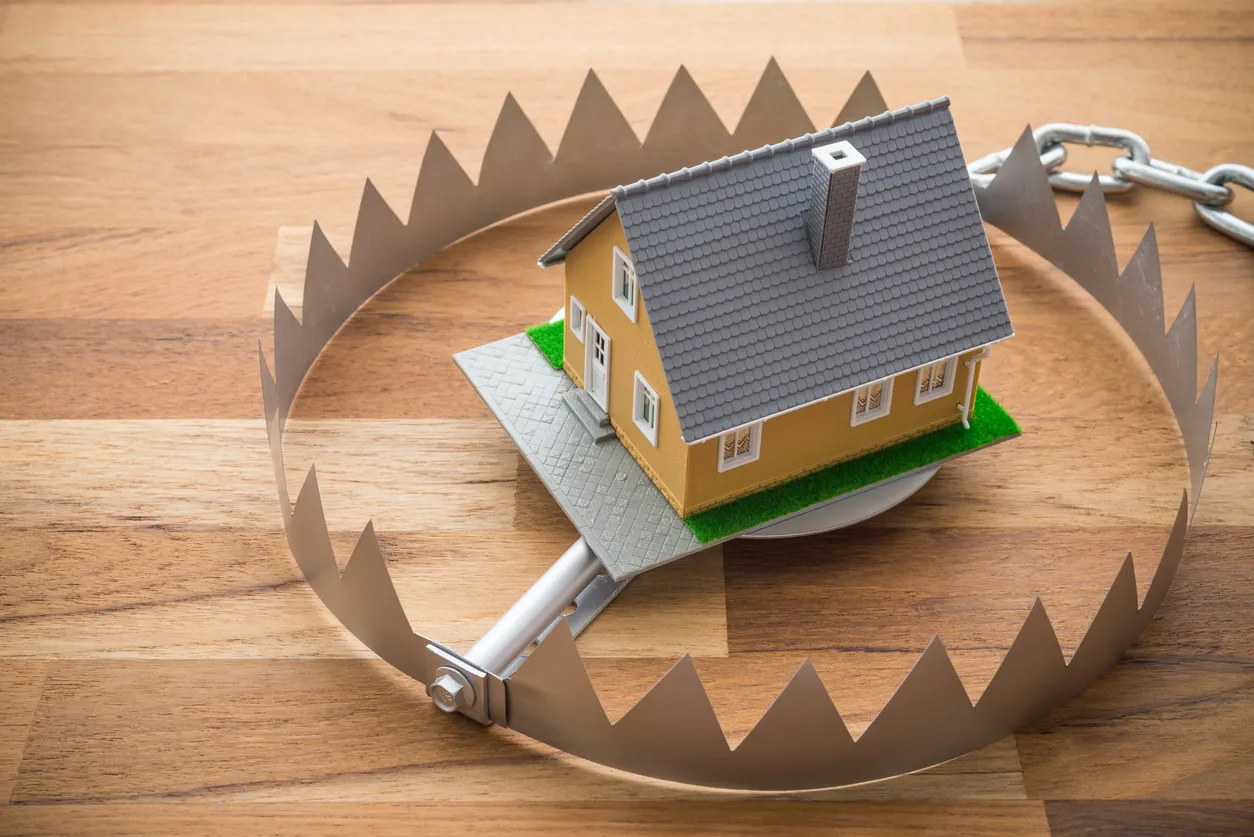
There are eight traps that sellers need to be aware of before they embark on their search for cheap commission.
By choosing an agent who offers the cheapest commission, sellers often choose the agent who will sell their home for the cheapest price.
It’s only common sense: If agents can’t negotiate a good commission for themselves, how are they going to negotiate a good price for your home?
There is absolutely no evidence to show that agents who charge a cheap commission sell homes for higher prices. On the contrary, however, there is ample evidence to show that agents who discount their commission often sell homes for lower prices.
In fairness to the discount agents, they are getting less commission per sale, so therefore they need to make more sales to earn the same as their more expensive competitors.
Turnover – as rapidly as possible – becomes their focus.
Many agents who offer a low commission have a range of extra costs that, when added to their cheap commission makes them very expensive.
Beware of agents who have a raft of extra charges – everything from marketing costs to floor plan costs to drone costs to copywriters. Yep, you name it, they charge it. You must, therefore, ask the question: “Are there any extra charges in addition to your commission?”
An agent who charges 1.5 per cent commission seems cheaper than an agent who charges 2.5 per cent. But if the 2.5 per cent agent includes all costs – advertising, marketing, floor plans and extras, then the 2.5 per cent agent may well be cheaper.
Instead of worrying first about how much the agent gets, sellers should worry about how much they get.
An agent who sells your home for 10 per cent more than another agent is certainly worth more commission.
Indeed, if you are paying one per cent extra in commission which gives you ten per cent extra in sale price, then the agent that charges you that extra one per cent (say 2.5 per cent compared to 1.5 per cent) is effectively the cheaper agent.
Remember: The cheapest agent is the one who sells your home for the highest price.
Let’s be clear about something that applies to all agents. Their commission is negotiable up until the point of unconditional sale.
The mistake that many sellers make is negotiating the rate of commission before the agent has even started work. You are not hiring a bricklayer where you know how many bricks are to be laid. And it’s not like buying a car where the same models are identical and so price becomes a major factor.
Different agents will almost certainly sell your home for different prices.
Therefore, while you can ask what commission they like to charge, you should make it clear that you, the seller, will decide on the amount of commission once you have seen the amount of the sale price the agent negotiates for you.
If an agent says, “We do not negotiate commission at any stage,” get rid of them. These agents are likely to ask you to drop your price while refusing to drop their commission.
Of course, you can try asking the ‘we-never-discount’ agents: Have you ever given a discount to any seller?
All agents, at some stages, have given discounts to some sellers.
If you cut the agent’s commission before they even start working, you are removing their incentive to get you the best price.
You should make it clear to the agent: Get us a great price and we’ll happily pay your commission rate. If you can sell our home for a higher price than your cheaper competitors then, of course, we’ll pay you a higher commission.
Make sure, however (for your own peace of mind and safety), that you write into the agent’s listing agreement the following phrase: “The agent agrees that the commission rate is negotiable until the point of unconditional sale.”
Even if you do not write this statement into the agent’s listing agreement, you can still hold out for the net price you desire.
In other words, when the agent brings you an offer from a buyer, you can reply with the amount you want “clear” (after their commission).
For example, if the agent brings you an offer of $2.5 million, you may decide to accept it provided that you get $2.5 million after allowing for the agent’s commission.
So, if the agent wants to be paid 2.5 per cent, they can add 2.5 per cent on to the $2.5 million figure – which would mean a gross sale price of $2.564 million.
It’s a magnificent incentive to tell an agent – once you get to the pointy end of the negotiations – that you will accept an offer provided it is “clear” (after commission). This means that the agent is then negotiating for their own money. You’ve got yours.
If they can only get the buyers to increase their offer to $2.538 million, then the agent will have to accept 1.5 per cent commission.
Sometimes – indeed more times than sellers realise – agents already have the right buyer for your home. An efficient agent keeps in close contact with many of the buyers who are looking to buy in your area.
Some of these buyers are fed up with looking and will pay a great price if the right home comes on the market.
If that’s your home, then an effective agent will have an immediate buyer at a great price.
But some sellers then demand a discount on the basis that the agent only did a day’s work. And maybe only showed their home to one buyer.
This is why many agents will deliberately prolong the sale process – and, in doing so, often end up selling the home for a lower price.
Make it clear to your agent that you will not punish them if they sell your home immediately for a great price to a buyer who’s known to them.
Agents who save you the agony of weeks on the market and thousands of dollars in advertising costs should be rewarded not punished.
So many sellers fall for the trap of paying advertising costs. They fail to realise that, if advertising really was the way that agents found buyers, why have an agent? Why not sell your own home and pay no commission?
But, of course, the advertising is merely a smokescreen. Its main purpose is to promote the agents. They build their profile at your expenses. They find other leads – both buyers and sellers – thanks to your naivety and trust.
If you can find an agent who does not charge you for advertising expenses – at least not until your home is sold and you are happy – that’s the agent to consider.
The greatest cost in selling a home is not the commission. It’s the amount by which a home is under-sold.
Despite their claims, most agents are hopeless at negotiating. They think that pushing sellers down in price is negotiating. They think that relaying offers and counter-offers back and forth between buyers and sellers is negotiating.
The best agents are those that charge you nothing (no marketing costs, no extras, nothing at all) until your home is sold and you are happy with the net price you receive.
As a seller, you should familiarise yourself with some basic principles of real estate negotiation. This will help you recognise agents who are skilled negotiators.
If you haven’t already received a copy of the 42 Rules of Modern Real Estate Negotiation – originally written for agents but now available free of charge to all homeowners, be sure to download a copy.
A common question we are often asked is: What’s a fair rate of commission?
On an average home, assuming that an agent is a good negotiator and is able to obtain an excellent price for a home, a commission rate of between 2 and 2.5 per cent is fair. On homes worth many millions of dollars, the commission is often less than 2 per cent.
In some cases, where properties are extremely hard to sell – or the values are extremely low – then a good agent may justifiably charge more. My wife and I have paid an agent as much as 5 per cent to help us sell some poor-quality low-priced properties.
Without the skill and effort of this agent, we would not only have not achieved a good price, we may not have achieved a sale.
So thank you Tim Altass, you are truly one of Australia’s best agents.
At the other end of the spectrum, however, some agents are worth nothing – indeed less than nothing.
Most sellers would be surprised how, in many cases, if they cannot find an agent who’s a skilled negotiator and who’s capable of getting them a great price and therefore more than covering the cost of their commission, they’d be better off selling without an agent.
But that’s a topic for another article on another day.
In the meantime, take your time to find the agent who’ll sell your home for the highest price. And believe it, that’s unlikely to be the agent who charges the lowest commission.
******************
To comment on this article, please click here.
To contact us, please click here.
To follow Neil on Twitter, please click here.
To visit our Facebook page, please click here.
To read more Articles, please click here.
******************


Margot McLaughlin says:
Another trap: Accepting the agent’s recommendations on doing an expensive “staging”; who to get to do that staging; and, if the seller balks at the cost, the agent’s recommendation on a finance company that can lend the seller the cost of that staging. We came across an agent who tried to do just this. Recommended an expensive staging ($60,000 for a house worth just under $2 million!!!), to be done by a company with which they were associated, and the cost of that staging to be lent to us by, guess what, a company with which the agent was associated. We did not accept their “kind offer” but instead went for a Jenman approved agent who rightly told us that we could use some of our own furniture, put the excess into storage, keep everything clean and tidy, and add a few small items to unify the look. Total cost was under $100 and we sold quickly for a great price. Thanks Neil and co for your support and expert and ethical advice.