

by Neil Jenman
Reading time: Apx 8 mins
The house across the road sold for $2.5 million.
Our place is much better. We should easily get $3 million, right?
Wrong.
The house across the road sold before the budget in May – which is about when house prices began to fall.
There are some new facts in today’s real estate market. And sellers ignore these facts at their peril.
The first fact is that prices are falling. Just as the government intended. And just as most Australians want to happen.
The second fact is that, in each area, there are certain types of homes, many like others in the area. With apartments, the similarities are even closer.
So, unless a home is radically different, it’s value will fall along with similar homes.
The third fact in today’s real estate market is that many agents are moaning. And negative.
“It’s never been so bad”, say some. “No one is coming to auctions”, say others.
Agents who once had a gluttony of buyers are facing a famine of buyers. Some have made no sales for several months.
As most agents are paid commission-only, plenty are quitting. Better to drive an Uber than starve at an open-house.
But as far as home sellers are concerned, there is a crucial fourth fact.
Although some homes are on the market for months, plenty are being sold – many within days or weeks of being on the market.
For one reason. These owners are realistic.
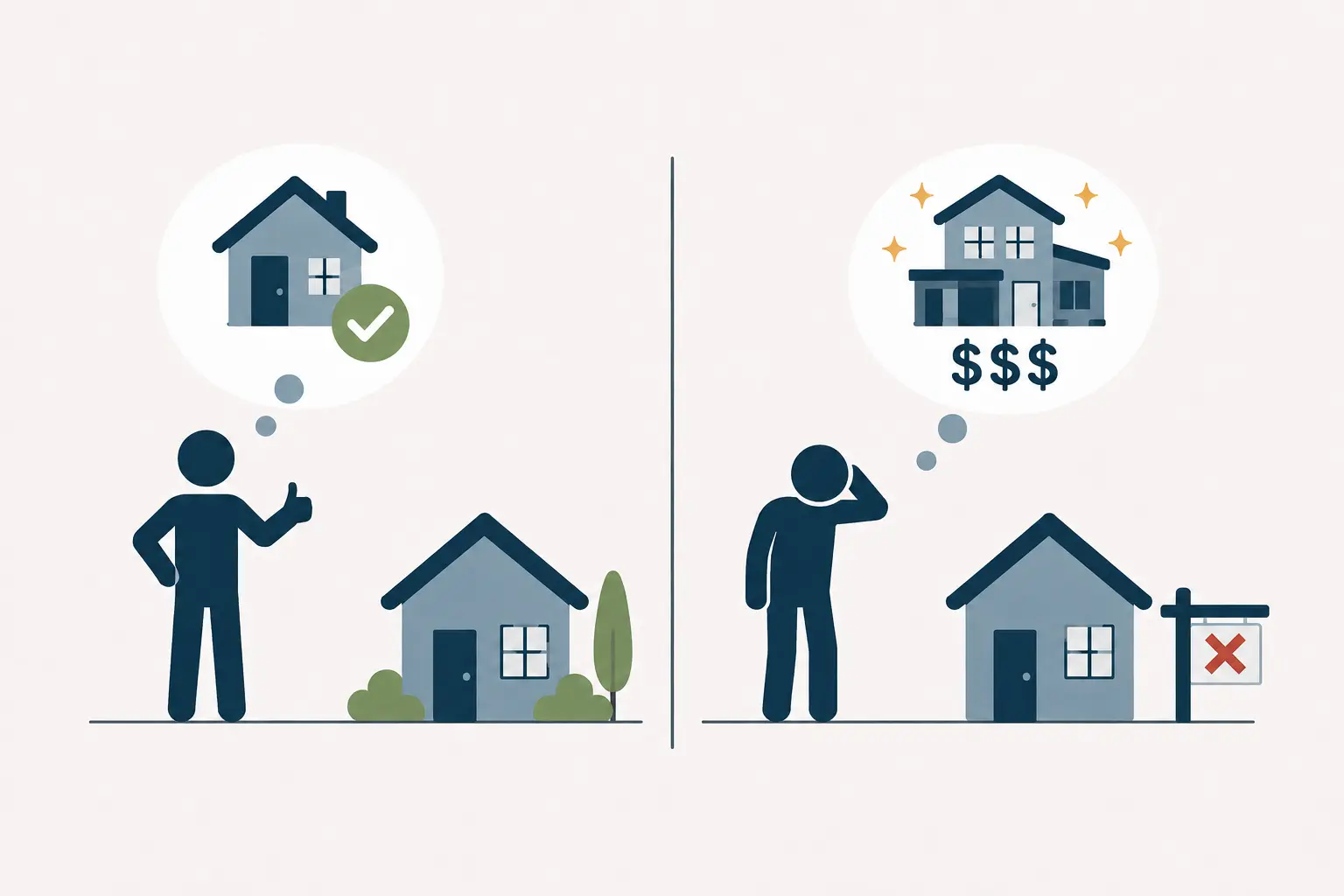
In today’s world, there are two types of sellers.
First, there are realistic home sellers.
These are sellers who understand that the best price is whatever is the best that can be obtained in today’s market.
Not yesterday’s market.
If you want yesterday’s price, you should have sold yesterday.
Unfortunately, no one knows the peak of a market until that peak has passed. And because no one owns a time machine we can’t go back and sell today’s property at yesterday’s price. That could only be described as delusional.
Which brings us to the second type of seller in today’s market: Delusional sellers.
Delusional sellers are disappointed and frustrated. Most are blaming their agents. Or Mr. Albanese.
But worse, most delusional sellers end up selling well below realistic sellers.
Today’s home buyers are the most well-informed in history. Even the silly ones – those that delusional sellers hope to attract – know that prices are falling.
Delusional sellers choose agents who tell delusional sellers what they want to hear. They are choosing agents who lack the courage to tell owners the truth. Yesterday’s prices are long gone.
The favourite phrase of these weak agents – which they use as a shield against abuse – is: “We’ll give it a go.”
There is one sure way of knowing if a property is overpriced. It fails to sell.
The longer a home is on the market, the more buyers wonder what’s wrong with it. The more the value gets damaged.
Although an agent may have overquoted the likely selling price to entice the owner to choose that agent, it doesn’t change the fact that a market is a market.
Think of the stock market. Imagine you own shares that are trading at $65.
What will happen if you ask $75 for your shares?
You won’t sell, of course.
Although share markets are more clinical than property markets, both are markets. And one of the worst things that sellers can do in any market is inflate their asking price.
This “give it a go” factor only creates the “gone stale” factor.
And stale homes sell for lower prices. It’s a simple market fact.
While many agents accuse sellers of greed, there’s another human element at play here.
It’s fear.
One of the biggest fears of sellers is underselling their home.
But, as long as they are not selling by auction, sellers should not fear pricing their homes at a realistic level for the following reason: If your home is priced too low, you’ll attract two or more buyers. And then, if your agent is a good negotiator, the agent will ask each buyer to make their best offer (in private). The highest price offered becomes the best market price – on that day – for that home.
If the sellers don’t want to sell for the best price, they can decline. But be careful of another common mistake in today’s market – waiting.
Waiting for prices to go up when prices are going down is nonsensical. Maybe delusional, again.
How long can you wait?
No one knows when prices will rise again. Most experts (other than Louis Christoper of SQM Research) get it wrong.
There are more issues pointing towards a real estate crash today than for years. There’s the negative gearing issue. The capital gains issue. The SMSF issue. The affordability issue. The interest rate issue. The global confidence issue.
Consider this: In October 2023, one of Australia’s most prominent business icons bought a home for $15.85 million. He sold it in June this year for $8.35 million.
That’s a loss of $7.5 million. Plus, expenses. In three years.
So, if the smartest are getting it wrong, imagine what’s happening to ordinary homeowners.
Saying, “I’ll wait for prices to go up” or “We’re not in a hurry,” can be costly.
Imagine your home was on fire. Would you be in a hurry to put it out?
Of course.
But falling prices are a financial fire.
Sellers who stick their chests out and say they are “not in a hurry” are burning thousands of dollars.
The offer you get for your home today – as bad as it may be compared with yesterday’s prices – will likely be far better than the offer you get tomorrow if you “wait for the market to pick up”.
What if it doesn’t pick up?
What if prices take five years to recover? How about ten years?
How about never.
Impossible?
Maybe, but the offer you refuse today may be the offer you’ll wish you accepted tomorrow.
For those sellers who are in a state of delusion, it’s possible that the buyer for your home – at the current price you’re demanding – may not have been conceived yet. Seriously.
So, if you get the best offer in the current market, you only have two choices: Sell or stay.
If you sell, you can get on with your life. And if you’re buying again – especially upmarket – then a falling market works in your favour.
If you stay, it may be for many years.
Sure, we all like to sell for the highest price and then buy for the lowest price. But real estate is not our own personal lottery. It doesn’t obey our commands.
The market can be cruel. It doesn’t care about our plans or how much money we “need”.
The market is only concerned with realism. It only works for realistic sellers.
Sellers who demand too much are disappointed. By keeping their homes on the market too long, they turn their homes into gloom time lemons.
It’s not just failed auctions that are turning into lemons. Any home where the owners are delusional will likely sell for far less than if the owners are realistic.
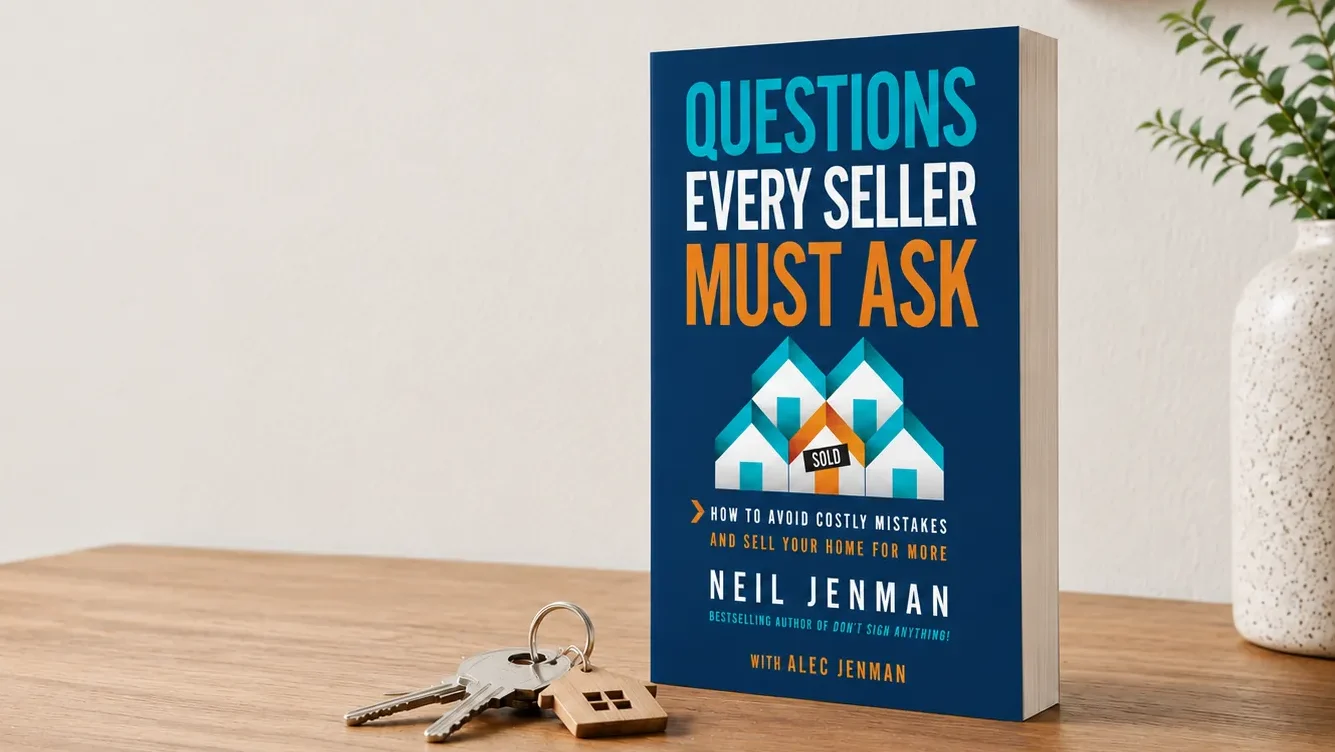
As happens in all markets, the three big secrets to success are first to acquire knowledge (such as reading the latest Jenman book).
The second secret is to find a good agent – and in a gloom market you need an agent who’s focused on following up buyers (so it’s worth mystery shopping them).
And finally, the third secret is to be realistic. As the saying goes: “It is what it is.”
Sure, when the market is booming, it’s possible to sell above market value.
But when the market is falling, demanding a boom price is delusional.
As a seller in today’s property market, you can be realistic or delusional.
Be assured, however, that extensive research reveals the raw truth.
Being delusional leads to disaster.
Being realistic leads to success.
******************
To comment on this article, please click here.
To contact us, please click here.
To follow Neil on Twitter, please click here.
To visit our Facebook page, please click here.
To read more Articles, please click here.
******************



Graeme Morris says:
Thanks again for such a relevant topic. Your timing for this article is impeccable for my situation.
Marian says:
Am I right in assuming a Home Valuation is still the best way of determining what my home is worth in this falling market?