


by Neil Jenman
Reading Time: Apx 11 minutes
Bill and Sonia’s home is up for auction this weekend. They should cancel it.
A few weeks ago, when their agent was vying for their business, he said their home was worth “upwards of $3 million”.
Not anymore.
Since they signed-up, Sonia said it’s like they hired a different agent.
“We’ve been bombarded with bad news,” Sonia said yesterday.
And not just bad news about what’s wrong with their home – it’s too old (it’s 15), it’s too far from the station (1.4 km), it needs work (it doesn’t) and, of course, the great kicker – the price.
Almost every second day, the agent is hitting them with messages that begin with seven words, “Buyer feedback on the price is indicating…” Followed by horrendously low figures.
“We’ve had such low offers,” Bill said. “The worst has been $2.2 million. That’s $800,000 below what the agent quoted us a few weeks ago. There’s no way we’ll sell it that low.”
But what’s the best offer so far?
According to Sonia, there may (emphasis on “may”) be a buyer coming to the auction who – in the agent’s words – “may go up to $2.4 million.”
“But that’s a massive 20 per cent discount on the $3 million we were quoted”, Sonia said.
Yet the agent told them about the $2.4 million as if they’d be “lucky to get that price”.
Bill chimed in and said, “We can’t afford to lose $600,000.”
But what can they do?
Bill’s been transferred interstate. They’ve bought another home (usually a mistake as you should rarely buy before you sell) and they must sell.
Every time they tell the agent, “But you told us to expect ‘upwards of $3 million”, the agent hits back with: “Yes, but this is what the market is telling us. You have to listen to the market.”
It’s a similar story told to thousands of home sellers now.
As many sellers ask: “How come the market always drops once we sign-up with an agent?”
If you’re trying to sell your home in the present market, and if you’re listening to the media reports, you might be scared out of your wits.
But, contrary to what’s in the media or what many agents might tell you (after you’ve signed up), there is something you need to know:
The market is bad, for sure. But not nearly as bad as many agents are telling you.
It is still possible to sell for a good price in a bad market.
To get the best price and to stop feeling like you’re being asked to “give your property away”, there are seven major rules you need to follow.
Do not put your house for sale now unless you are seriously willing to sell for the best price in today’s market.
If not, your home will go stale. It will leave a digital footprint which can last for years.
Homes that come for sale and don’t sell can become stigmatised. Buyers wonder what’s wrong with them. Why didn’t they sell?
So, do not play games with a bad market otherwise you risk damaging the value of your home.
Further, if agents and buyers believe you are simply ‘testing’ the market and hoping to sell for a win-the-lottery price, they will walk away. Your home will be shunned.
If you are selling in today’s market, let the world know that you are a serious seller.
That means you will sell for the best price you can get.
This will inspire good agents. And it will attract the serious buyers.
Remember the adage: Far better to spend three or four weeks searching for the best agent than spending three or four months stuck with a bad agent.
As well as there being “rules” for selling in a bad market, there are also rules for finding the best agent.
Make the time to do the research on agents. Beware of ‘ratings sites’ funded by agents where agents seem to have 100 per cent happy clients. There is a mob called RateMyAgent which should be known as FakeMyAgent.
If you want to know what agents’ past clients really think, go to productreview.com.au. There you will see agents who’ve got 80% negative reviews – whereas on RateMyAgent they’ve got 99% positive reviews. What money can do, eh?
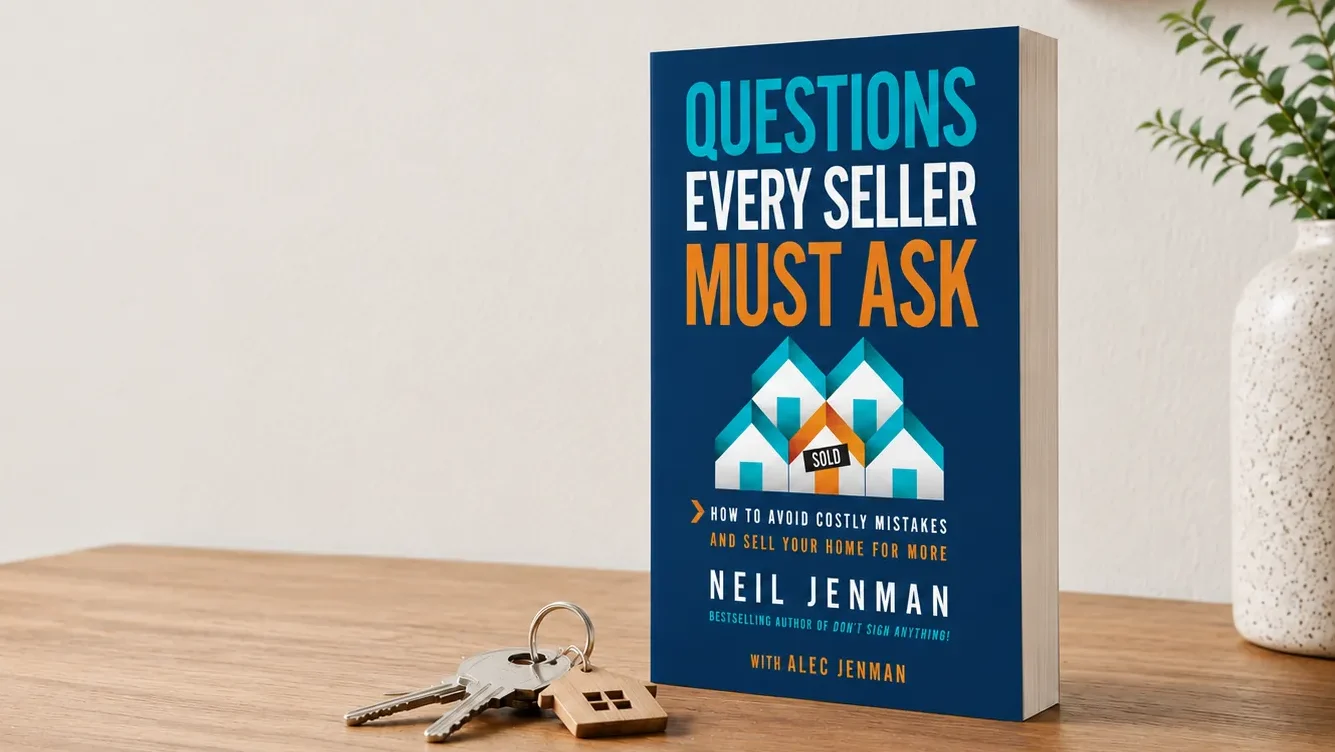
A great book to read – in addition to our latest book Questions Every Seller Must Ask – is a book called How to Control Real Estate Agents.
If you are selling soon and considering using our free support services, we will gladly give you a complimentary copy of How to Control Real Estate Agents.
As a homeseller, your main goal is to sell your home for the best price.
But the goal of most agents is to sell your home. At any price.
Seriously, if an agent sells your home for a low price or a high price, the agent always gets a high commission.
If you let them get away with it.
The story of Bill and Sonia is typical of what happens. Agents quote you one price before you sign up, then hit you with a lower price after you sign-up.
So remember, if the agent expects you to lower your selling price (below what they quoted you), you must demand that they lower their commission. Or fire them.
Rarely will you find agents that charges a low commission and sell your home for a high price.
Cheap commission often means cheap selling price. It’s all about turnover. Sign up sellers by offering a low commission. Then hit them hard – and blame the market – to accept a low price.
And then move on to the next inexperienced seller who doesn’t understand a vital point: If agents give their own money away, what will they do with your money?
Stop worrying about what goes into the agent’s pocket. Start worrying more about what goes into your pocket.
All commissions are negotiable. So wait and see what sort of a price the agents achieve for you before you negotiate their commission.
Never punish an agent who sells your home fast, especially for a great price.
If an agent can sell your home within the first couple of weeks, without dragging you through weeks of needless marketing costs, not to mention the stress and near-emotional torture of having to condition you down in price, they surely deserve a good commission.
If agents think you will punish them for a fast sale by asking for a lower commission, most will deliberately prolong the process.
And almost certainly sell your home for less.
If you were sick, would you ask your doctors for a discount if they cured you sooner?
Here’s how to instantly recognise bad agents in a bad market. Those who recommend auction.
It’s bad enough to sell by auction at any time.
But it’s reprehensible to recommend an auction in a falling market.
Stay away from incompetent or crooked agents – those who recommend auction.
And if you doubt what I am saying, I will gladly send you my book, 88 Reasons Why You Must Never Sell Your Home By Auction.
Here’s the problem: The minute you advertise your home online, you signal to the whole world – non-buyers, sticky-beaks and agents – that you are selling.
Of course, what’s wrong with that? Isn’t that the purpose of advertising?
Well yes, but if your home doesn’t sell within a couple of weeks, a month at the most, then everyone knows that your home has been rejected.
The longer you advertise and the more places you advertise, the lower your final selling price. Of course, agents know this. They use advertising to “condition” you down in price.
They will tell you that you have had 7,642 views and no one bought your home. Therefore – and here comes more of the “listen to the market” excuse – the market is saying you must drop your price.
In every area, there are but a handful of buyers at any one time. All agents have buyers on their books. Indeed, some agents openly boast about how many buyers they have on their database. One agent, Jellis Crag (sic), in Melbourne claims to have two million possible buyers on their database.
And if you list your home with them – so they imply – you can have access to these two million buyers.
So, how come the first thing most of their salespeople do is hit sellers for thousands of dollars in advertising costs to find buyers?
Because the purpose of advertising is almost always to promote the agents not the properties.
The first thing that all agents should do when they first list a home for sale is contact the buyers on their database.
But be careful.
“Contact” does not mean sending an email. That’s laziness.
You want your agent to telephone buyers and enthusiastically tell them about your home – that has not been advertised online.
As many buyers’ agents are now promoting (and rightly so): “The best homes are never advertised”.
Has your agent been in touch with dozens of buyers’ agents?
Has your agent telephoned and spoken with dozens of prospective buyers from their data base?
If not, why not?
Don’t pay an agent for being lazy. Tell them to do what the American real estate sales trainer, Tom Hopkins, used to tell agents, GOYA!!
It stands for Get Off Your Backside.
One of the best quotes about selling and advertising is this: Advertising is what salespeople do when they are too lazy to call people.”
Do not fall for the “must advertise” blurb.
As outlined clearly in Questions Every Seller Must Ask, there are at least 12 steps an agent should take on your behalf before advertising your property on a major website.
In some areas, more than 80 per cent of homes are bought by locals – often by neighbours.
Has your agent approached your neighbours?
The best agents will knock on every door in your street telling everyone about your home. The worst agents will keep asking you for more money to advertise – especially those trained by a guy called Tom Panos.
Often, I tell the story of a farmer who sold his farm for $30 million. He paid the agent $600,000 in commission. Plus around $50,000 for advertising.
And the buyer was the farmer next door.
So maybe, before you call an agent, you could lean across the fence and say, “Hey Bob, do you want to buy our house?”
You may be surprised.
Advertising is the last thing you should be doing not the first.
This is the greatest rule of all.
If you want to sell for the best price in a bad market, be the best seller you can possibly be.
And, if you are lucky enough to own one of the best homes in your area and you are determined to become the best seller, you are sure to get the best price.
Adam and Kate own a magnificent home in a jewel of an area – the Hawkesbury Valley.
It was planned to be their forever home. But life takes our choices away at times and they had to move to Victoria.
They rented their home for a while but were disappointed with the tenants. Few people love a home as much as owners.
And so, rather than risk another tenant, they have decided to sell.
But not without first travelling back to Sydney – many times over many months – and returning their magnificent home to its former glory.
They have done everything – and more – that can be done to make their beautiful home look as beautiful as it can possibly be. It’s been beautifully repainted. New carpets laid. The gardens are now glorious.
And when you walk in, you feel its beauty.
To their great credit, their home is near perfect.
As Adam shrewdly said, he didn’t want anyone to have any excuses about not buying his home.
And one more point: If you’re going to appeal to buyers’ hearts don’t write a typical bullet point advertisement listing endless features of the home.
Write an attracting advertisement that appeals to people’s hearts. Chances are that you’ll only need to advertise locally or send it to known buyers including to buyers’ agents – and you’ll find the right buyer without risking damaging the value on big real estate websites.
Yes, the best homes are often not advertised.
Adam and Kate have been more fortunate than many sellers. They have found an agent who’s prepared to accept payment (commission and marketing costs) only upon success.
And an agent who seems to be willing to work hard.
The agent is going to contact dozens – perhaps hundreds (as many good selling agents now do) – of buyers’ agents.
I helped them write a letter to be sent to buyers’ agents.
In addition, I’ve suggested they ask their agent to contact nine other professions where buyers are likely to be found. From mortgage brokers to lawyers to financial planners.
If you’d like to see the full list or the main letter to the buyers’ agents, please email [email protected].
Of course, the agents should follow up the letter with a phone call.
Another example of homeowners becoming the best sellers they can possibly be is the case of the former home of Jack and Silvia.
When they retired almost 20 years ago, Jack and Sylvia built their forever home on one of Sydney’s most beautiful [northern] beaches
From every window, all you see is the ocean, the beach below and rolling surf. No road, just walk straight from the front lawn, down a few steps and onto the sand.
Sadly, more life intervention. Jack and Sylvia passed away.
Before he died, however, old Jack read one of my real estate books. “That’s the way I want my home sold when I go,” he told his children.
I was so moved by old Jack’s belief in me that, after he died, I met his children. My son Alec and I went to the home on the beach.
As soon as I walked in, I was in love. This home has to be worth $15 million (to a buyer like me who loves it).
But, of course, I can’t live everywhere.
And so I have been giving the family some suggestions on how best to sell such a stunning home – one of a select few with direct beachfront access in Sydney.
To their credit, Jack’s three children, led by their eldest daughter, Emily (known as Em) have been the best sellers I’ve met in years. Their attitude is, “Tell us what to do and we’ll do it.”
The first thing was to find a good agent. Done.
But then, when the market turned, so did the good agent.
Back to the drawing board.
In the meantime, however, I asked Emily to make the home as beautiful as it could possibly be. I want buyers to love the home as well as the position.
Almost six months have gone by, and Emily has turned her parents former forever home into one of Sydney’s most gorgeous homes.
Some local agents are talking about prices around $10 million. Even less.
For a home of this calibre? No way.
If I had $20 million – and I wanted to stay in Sydney – this would be my home.
Anything less than $20 million – which seems likely to be almost half that amount – and I am sure, thanks to the foresight of their parents and the diligence of their children under Emily’s guidance, this is a home that buyers will fall over themselves to buy.
But what about the bad market?
What about all the negative media reports?
Well, how about we “what about” something else?
How about we say: What about buyers who’ve got the money, those who’ve worked hard to build a successful business and are looking for a reward for years of effort and sacrifice?
These buyers are more concerned with a home they love than what a market is doing. These are people who, whether they are buying a home for $1.5 million or $15 million, realise that happiness is more important than money.
If these people find one of the best homes – like the former forever beach home of Jack and Sylvia or Adam and Kate’s gorgeous dream home in the Hawkesbury Valley – and they can afford it, they will buy it.
And who cares what many buyers might be thinking?
Who cares what the media is saying?
If you own a beautiful home and you are determined to become the best seller possible – or, as Adam said, give buyers and agents no excuses to reject your home – you will sell it.
And while there may be less buyers at the moment, there is one point that all sellers need to remember: How many buyers do you need?
Just one.
That’s all.
Make your home the best it can possibly be. Do your research – and yes, that means read the Jenman books (especially Questions Every Seller Must Ask) and then appeal to that one buyer.
Both homes in this article have not yet sold.
Both are about to be offered for sale.
So, watch what happens. I am sure that they will both be sold – and for excellent prices.
Why?
Because the owners are willing to say, “I am not the expert so I will listen to the expert who gives me advice that I know is best for me.”
And that does not mean the agent who wants to charge tens of thousands of dollars in marketing expenses regardless of whether your home sells or not. Emily received a presentation from one agent. They said the home should sell for around $15 million. They advised auction – so straight away, Emily knew they were dodgy or stupid. Or both.
They gave her a quote for marketing expenses – $26,700.
Yes, in addition to the two per cent sales commission which, on a sale of $15 million, would be $300,000.
When Emily sent me this agent’s proposal, I told her to ask the agent this question: “So, is $300,000 commission not enough for you?”
I got that line from Bob Geldof.
The greed of today’s agent is breathtaking. As is their selfishness. Especially those who use the bad market as an excuse to frighten home sellers into under-selling their homes.
Yes, the market is bad right now – at least for some home sellers.
But it’s even worse for those sellers who choose bad agents or who don’t do their research.
If you’ve got a home to sell in today’s [supposedly] “bad market” and you follow these seven rules – to the best of your ability – you can be sure of one thing: You will get the best result.
And it may be a whole lot better than most sellers.
Oh – and one more thing – maybe it should be Rule #8: Get yourself a copy of the best real estate book ever written for sellers (that’s no exaggeration) – Questions Every Seller Must Ask.
******************
To comment on this article, please click here.
To contact us, please click here.
To follow Neil on Twitter, please click here.
To visit our Facebook page, please click here.
To read more Articles, please click here.
******************



Ross Carrick says:
If you are buying and selling at the same time it probably does not matter too much about “the market” as both properties will have gone up or down to the same extent. Or %
Is that so? PS. I enjoy your articles
Kevin Lee says:
Great article here Neil – as always, it’s well written & straight to the point. Unfortunately the number of dodgy agents is astonishing. I used to compare them to used car salesmen; I think that’s still relevant today.
Barry says:
A very informative article. Well done Neil.
Regards
Barry